
what is “jlwop”?
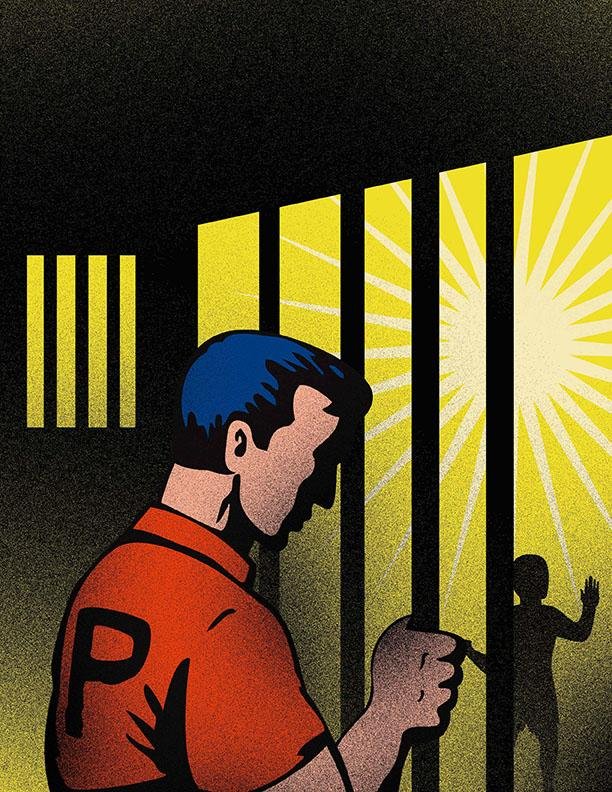
Juvenile Life Without Parole (JLWOP) refers to a sentence in which a person is convicted of a crime committed under the age of 18 and is sentenced to spend the rest of their life in prison with no opportunity for release.
In Wisconsin, individuals (as young as 10 years old) can be sentenced to life imprisonment for serious offenses, including crimes committed as juveniles. While courts are required to consider the age and circumstances of the individual, a life sentence without parole remains a legal possibility. In these cases, the sentencing court may determine that the individual is not eligible for release at any point in their lifetime.
This type of sentence has been the subject of significant legal and ethical debate. Research in psychology and neuroscience shows that adolescent brains are still developing—particularly in areas related to decision-making, impulse control, and risk assessment. As a result, many experts argue that young people have a greater capacity for change and rehabilitation compared to adults.
The U.S. Supreme Court has recognized these differences in several rulings, requiring courts to take a juvenile’s age and potential for rehabilitation into account before imposing the harshest sentences. However, JLWOP has not been fully eliminated, and individuals in Wisconsin may still receive sentences that effectively ensure they will die in prison.
Today, advocates, policymakers, and community members continue to examine whether permanent incarceration of youth reflects the values of fairness, accountability, and the belief in second chances.
what is the “juvenile lifer” bill?
This bill reforms how Wisconsin sentences individuals who committed crimes before the age of 18, recognizing the differences between youth and adults and creating opportunities for rehabilitation.
Key Changes
1. Ends Life Without Parole for Youth
Courts would no longer be allowed to sentence juveniles to life imprisonment without a chance for release.
Judges must set a future date when a person can be considered for parole or extended supervision.
2. Creates a Second Chance Through Sentence Review
Individuals sentenced for crimes committed as minors can petition for a sentence reduction:
After 15 years (most offenses)
After 20 years (serious offenses like homicide or certain sexual assaults)
Courts must hold a hearing and consider evidence of growth, rehabilitation, and behavior while incarcerated.
3. Requires Courts to Consider Youth as a Mitigating Factor
Judges must take into account factors like:
Age and maturity
Family and environmental influences
Peer pressure
Trauma history
Capacity for rehabilitation
4. Aligns Wisconsin Law with U.S. Supreme Court Rulings
Removes mandatory life-without-parole sentences for juveniles to comply with constitutional protections established by the courts.
5. Ensures Victim Notification and Participation
Victims are notified of hearings and have the right to be heard during sentence review proceedings.
Why It Matters
This bill shifts Wisconsin’s approach from permanent punishment of youth offenders to a system that:
Recognizes the potential for growth and rehabilitation
Provides a meaningful opportunity for release
Maintains accountability while promoting fairness
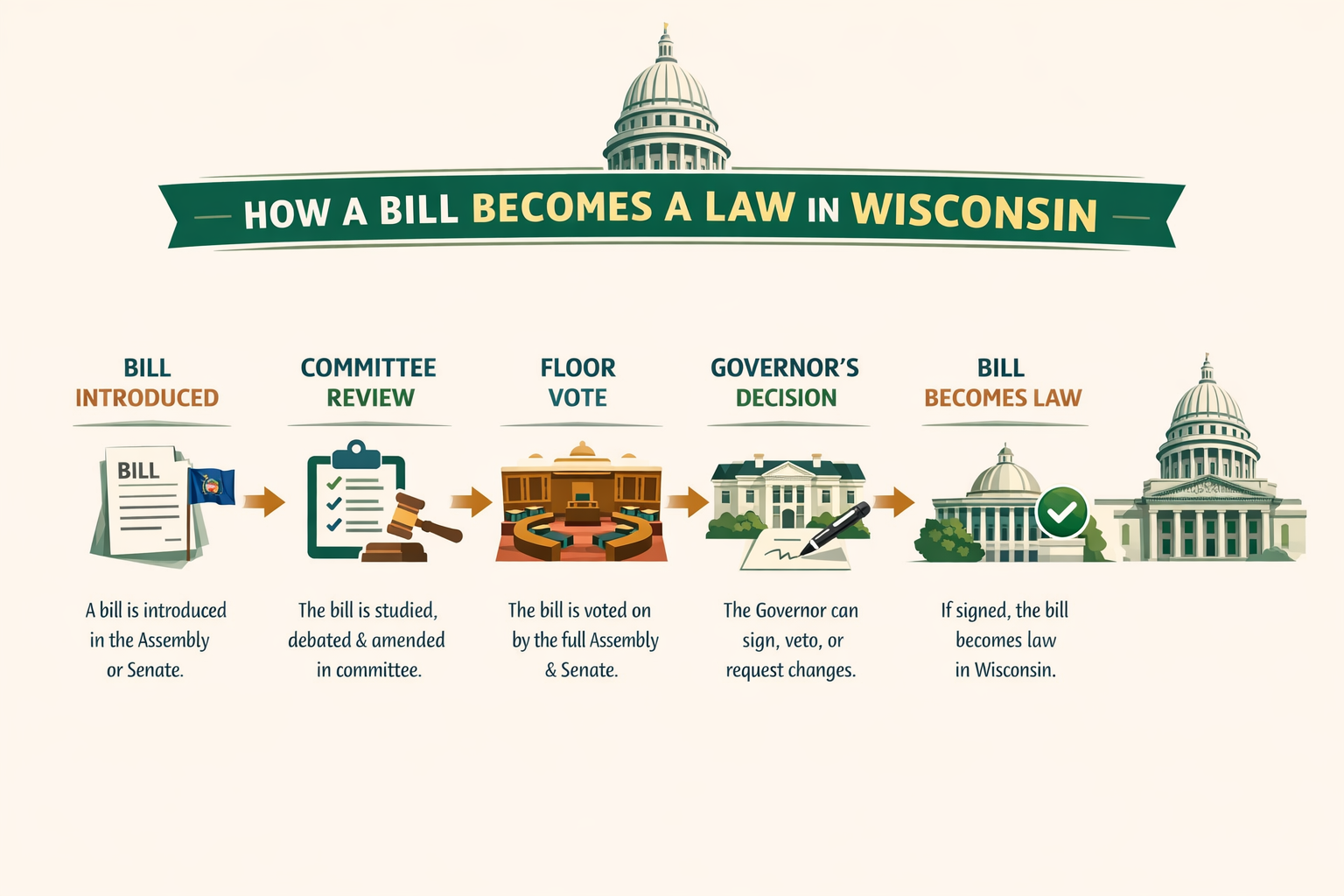
how does a bill become a law?
Here is the most recent bill text submitted last session:
how do i READ the bill text?
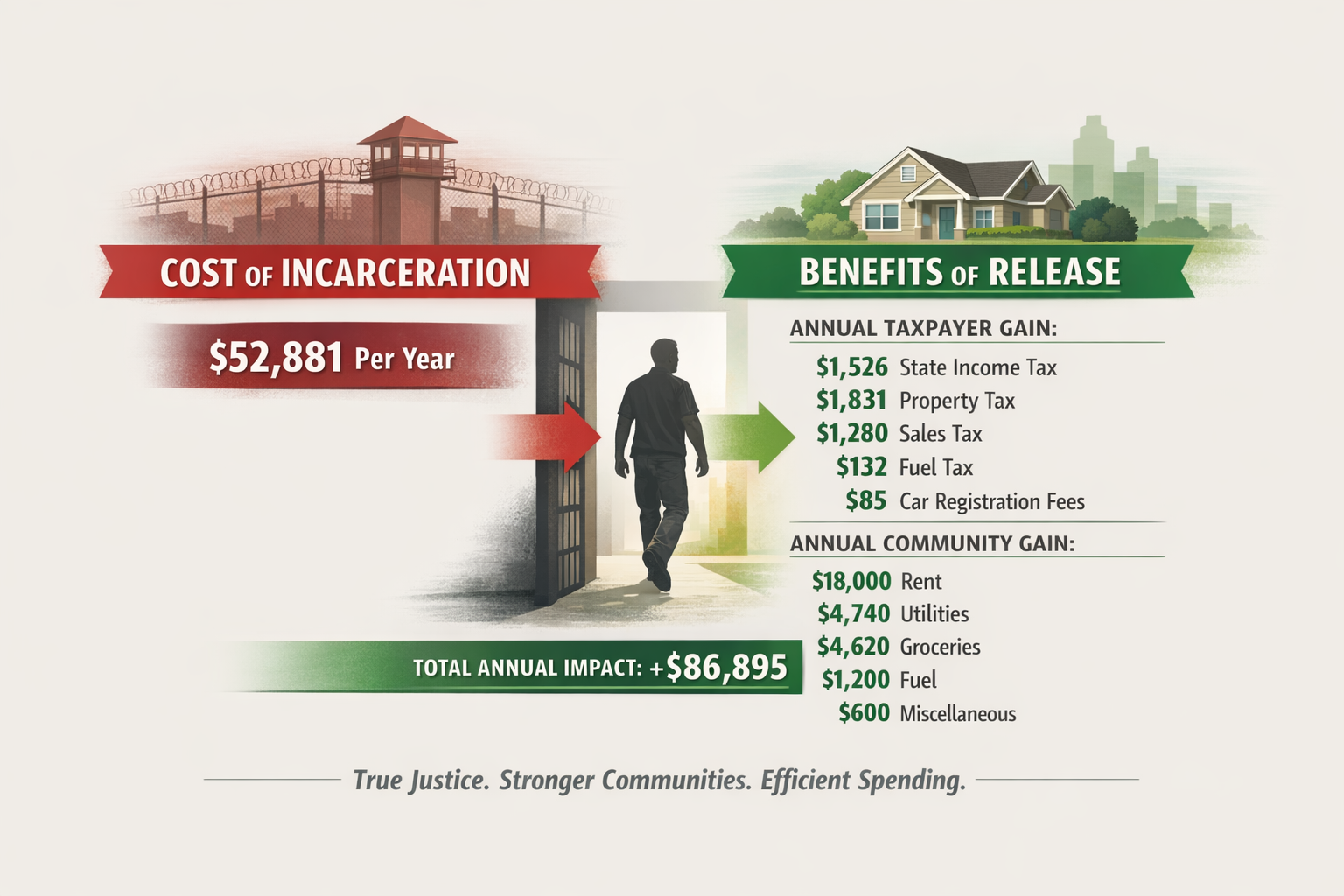
let’s compare ANNual taxpayer cost of an incarcerated individual vs the benefit of their release
okay! how can i help?
Please help get this bill passed by checking out our Volunteer page!